Five Ways to Lead a Productive Team

No one really willingly leads a team that is unproductive. Creating cohesive teams that consistently come up with clever solutions causes leaders a great deal of difficulty. However, despite having the best intentions, many of the methods used by leaders to enhance teamwork are not very successful. Leigh Thompson, a management and organisation professor at…


Leadership and Culture

Leadership eats culture. Culture does indeed eat strategy. However, leadership consumes culture, and no one is better equipped to undermine an organization’s efforts than individuals in leadership positions. According to Dan Denison, “it is tremendously alluring to sit at the top of a great worldwide firm and consider your strategic options.” The different impressions of…

Transformation Through Capability Building

McKinsey defined capabilities as “crucial value-building elements or the hard and soft skills needed to help organizations reach—and sustain—their full potential.” We are aware that most businesses fall short of expectations when it comes to capabilities during enterprise-wide transformation initiatives. Most businesses understand the value of having a talented and dedicated team, yet many still…

How To Thrive in the VUCA World

Business leaders must develop three competitive advantages for their organisations to thrive in this VUCA World: insights, commitment, and execution. With the Ukraine war, inflation, and the pandemic in recent years, we can all agree that we are already in the volatility age. There are two types of emerging business leaders according to McKinsey:  Leaders…

How To Build Your Organisational Capabilities

Organisational Capabilities Defined Harvard Business Review defines organisational capabilities as the “collective skills, abilities, and expertise of an organization—is the outcome of investments in staffing, training, compensation, communication, and other human resources areas”. Organisational capabilities develop when a business satisfies its employees’ combined talents and abilities.  Companies Focus on How To Build Organisational Capabilities According…

Developing employees for tomorrow’s workplace

Nobody could have foreseen the talents required to succeed in today’s economy fifty years ago. Most changes were totally unexpected. For instance, the increase of rigorous quantitative skills in the financial, advertising and healthcare services. Moreover, the rapidly collapsing distinctions hard and soft skills was unpredictable. Punit Renjen, CEO of Deloitte Global, believes that a…

Training That Promotes Learning In The Flow of Work

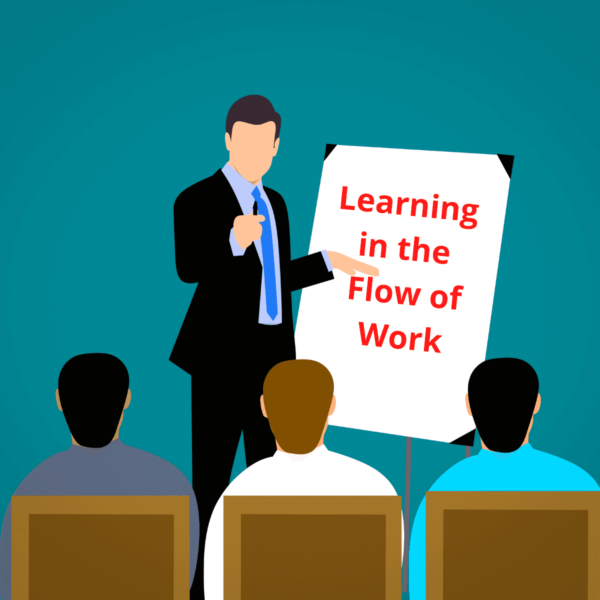
Creating Training that Promotes Learning in the Flow of Work LIFOW or Learning in The Flow of Work conceptualised by Josh Bersin, contends that learning resources must be accessible inside the learner’s workflow in order for continuous learning to occur. According to author Asha Pandey, employees learn most effectively when they are expected to apply…

5 Reasons Why Employees Quit

There are 5 Reasons Why Employees Quit The Great Resignation, coined by Anthony Klotz- University of London’s school of management, was sometimes referred to as the “Big Quit” and the “Great Reshuffle.” Workers have started deliberately leaving their jobs in considerable numbers beginning in early 2021 in Western countries, China, and India. Possible explanations include…

Culture: The Only Corporate Defining Factor

Culture is the Only Corporate Defining Factor. We all appreciate corporate creativity and executives who create revolutionary new products, reimagine how people access goods and services, or come up with new approaches to engage and delight consumers. However, it is our responsibility as business leaders to create and maintain the company culture, which is the…