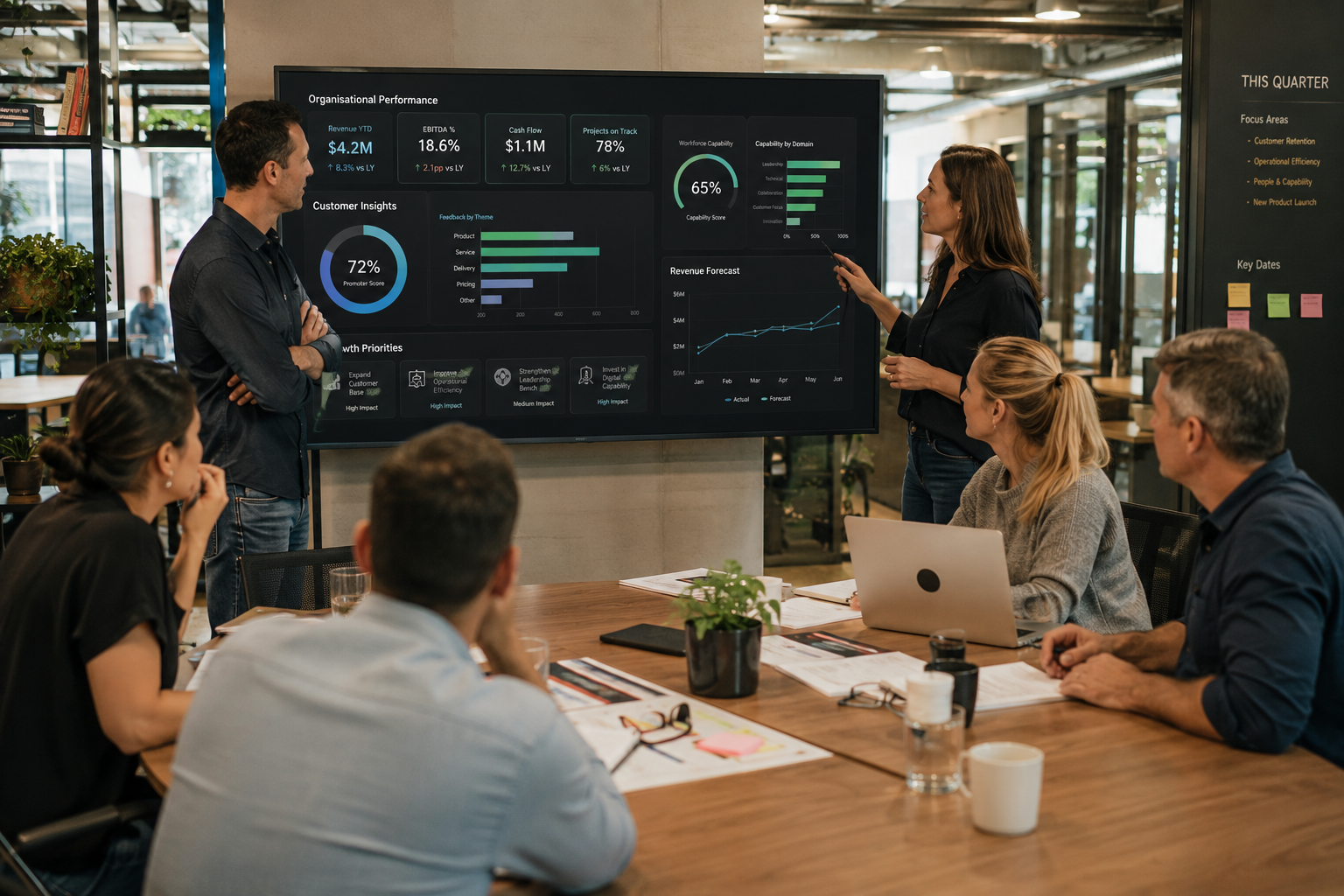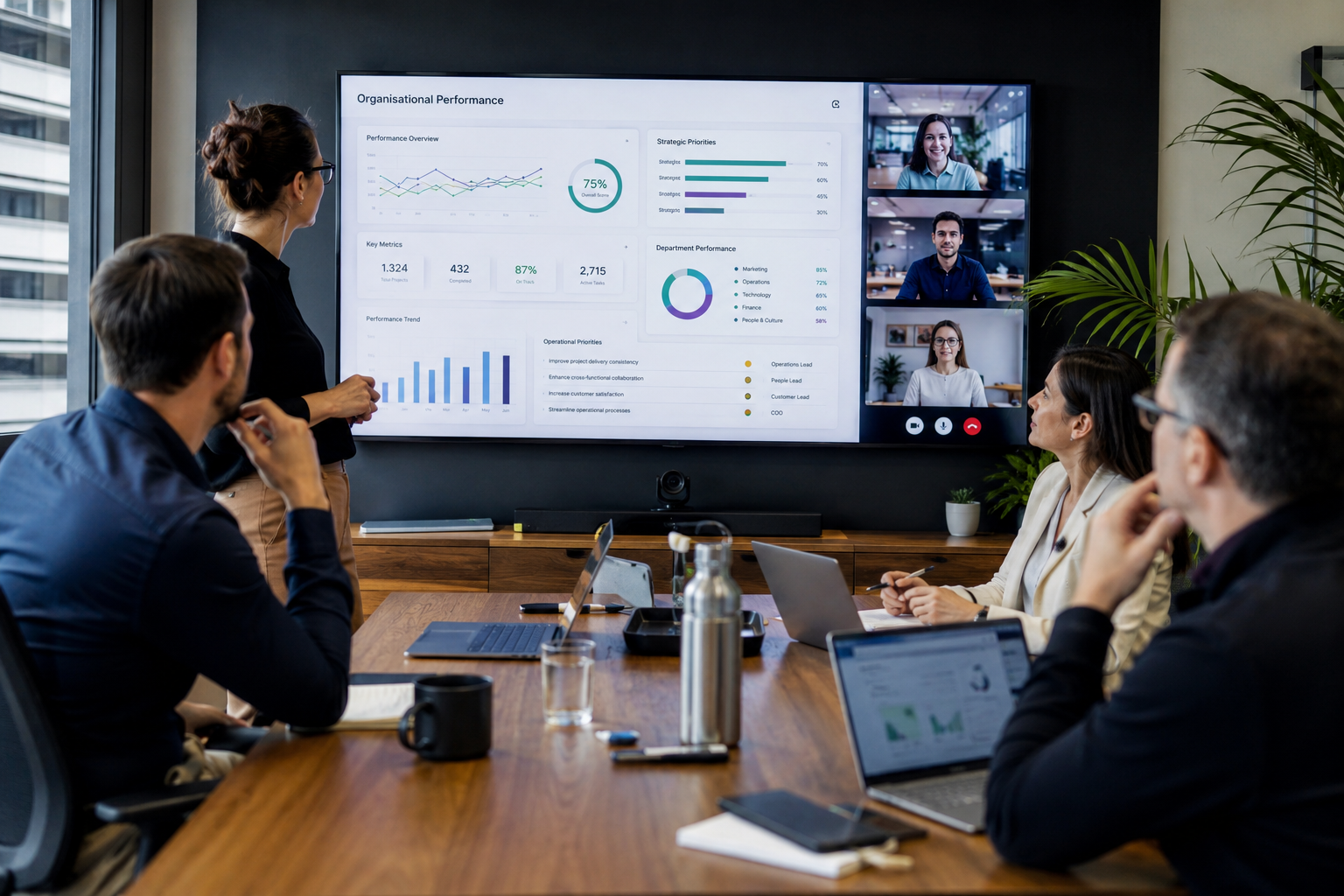
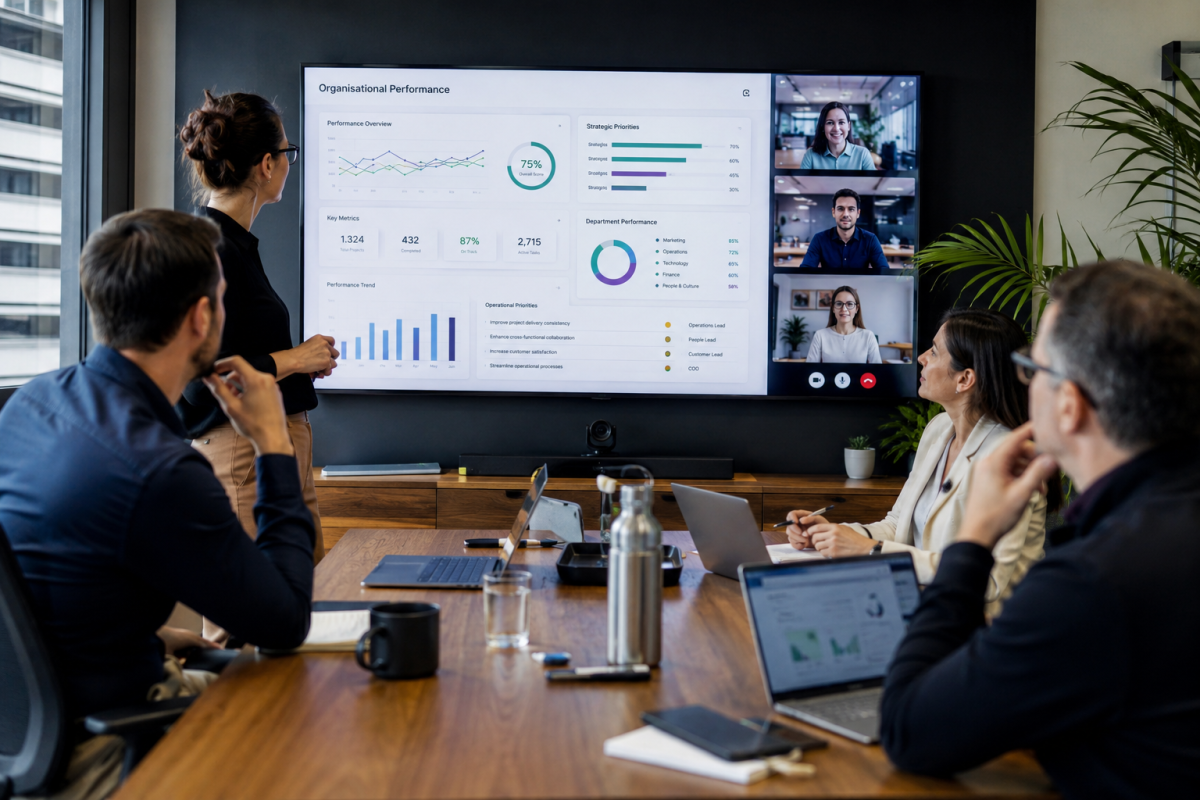
Many businesses are busy. But not all of them are performing. Across Australian organisations, leaders are working harder than ever to maintain momentum while navigating:
- workforce pressure,
- operational complexity,
- AI disruption,
- rising customer expectations,
- and constant organisational change.
The issue is not a lack of activity but a lack of alignment. Teams are overloaded with competing priorities. Leaders are communicating urgency constantly. Employees are adapting to new systems, new expectations, and new ways of working — often all at once. As a result, many organisations are starting to experience the same problem: Performance slowdown despite continuous effort.
This is where organisational performance becomes more than productivity metrics or strategic planning. It becomes a leadership and execution issue. Increasingly, organisations are recognising that sustainable performance requires more than strategy alone.
Activity Is Not the Same as Performance. One of the biggest risks facing organisations right now is confusing movement with progress.
Businesses are:
- launching transformation initiatives,
- implementing technology,
- restructuring teams,
- increasing reporting,
- and accelerating operational demands.
But more activity does not automatically create better outcomes. In many organisations, teams are becoming reactive instead of focused. People are spending more time responding than executing.
This creates:
- slower decision-making,
- fragmented accountability,
- communication overload,
- and declining operational clarity.
According to Gallup, employee engagement and manager effectiveness continue to have a significant impact on productivity, retention, and business performance outcomes.
Performance is heavily influenced by how consistently organisations align:
- leadership behaviour,
- communication,
- priorities,
- and operational expectations.
Without that alignment, effort becomes fragmented quickly.
Why Leadership Alignment Matters More Than Ever
In high-performing organisations, leaders create clarity; not just direction.
There’s a difference.
Many businesses communicate strategic priorities well, but operationally, teams still experience:
- conflicting expectations,
- inconsistent decision-making,
- unclear accountability,
- and constant reprioritisation.
This creates friction across the organisation, and friction slows performance. This is particularly visible in hybrid work environments where leadership visibility alone no longer drives alignment.
Employees are paying closer attention to:
- behavioural consistency,
- communication quality,
- responsiveness,
- and decision-making integrity.
When leadership behaviour and organisational priorities are misaligned, performance declines quickly — even when strategy looks strong on paper.
What High-Performing Organisations Do Differently
High-performing organisations are not necessarily less pressured, but they tend to be more aligned operationally.
They are usually clearer about:
- what matters,
- how success is measured,
- how decisions are made,
- and what behaviours support performance.
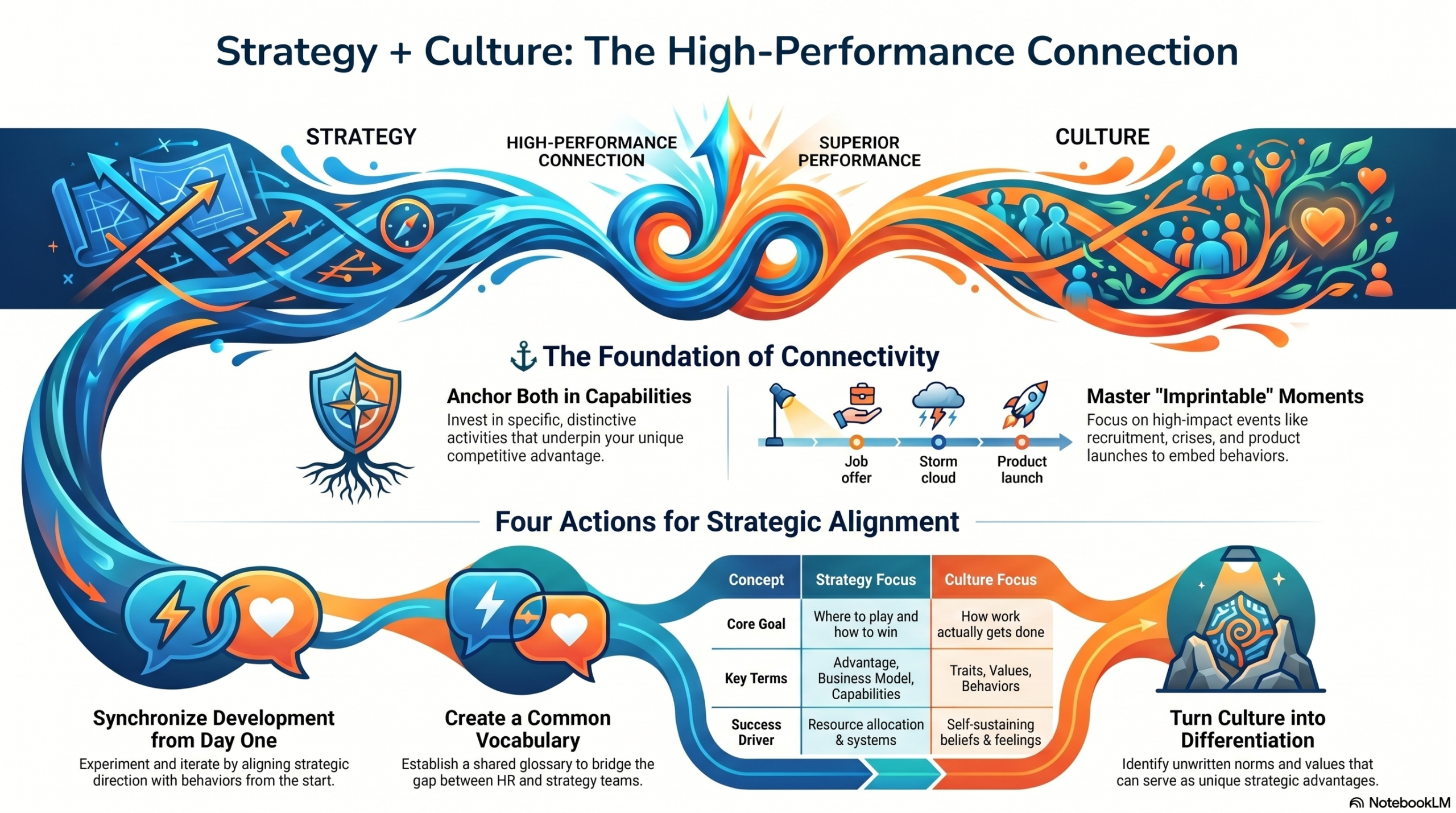
Importantly, they also recognise that organisational performance is behavioural. That’s where the work of Edgar Schein remains highly relevant.
Schein’s model highlights how deeply underlying assumptions shape organisational behaviour:
- how teams communicate,
- how leaders respond under pressure,
- how accountability operates,
- and how employees interpret priorities.
When these behavioural patterns are aligned, organisations move faster and execute more consistently. When they are not, operational drag increases.
Why Performance Consulting Is Changing
Performance consulting is no longer just about improving systems or designing strategy.
Organisations increasingly need support with:
- execution consistency,
- leadership alignment,
- operational accountability,
- behavioural clarity,
- and organisational capability.
Because sustainable performance improvement happens operationally — not theoretically.
In practice, this means helping organisations:
- reduce execution friction,
- strengthen leadership consistency,
- improve communication flow,
- and align behaviour with strategic priorities.
That’s particularly important right now as organisations attempt to balance:
- performance pressure,
- workforce fatigue,
- customer expectations,
- and rapid technological change simultaneously.
The Organisations Performing Best Right Now
The organisations maintaining strong performance in 2026 are not necessarily the ones moving fastest.
- They are the ones maintaining clarity under pressure.
- Their leaders communicate consistently.
- Their teams understand priorities.
- Their accountability systems remain stable during change.
- And importantly, their culture supports execution instead of slowing it down.
That creates operational resilience, and resilience is becoming a major competitive advantage.
Many organisations are currently experiencing performance slowdown without fully understanding why. The issue is often not effort. It’s operational alignment.
When leadership behaviour, organisational culture, accountability, and execution systems work together consistently, businesses perform more sustainably — even during periods of pressure and uncertainty.
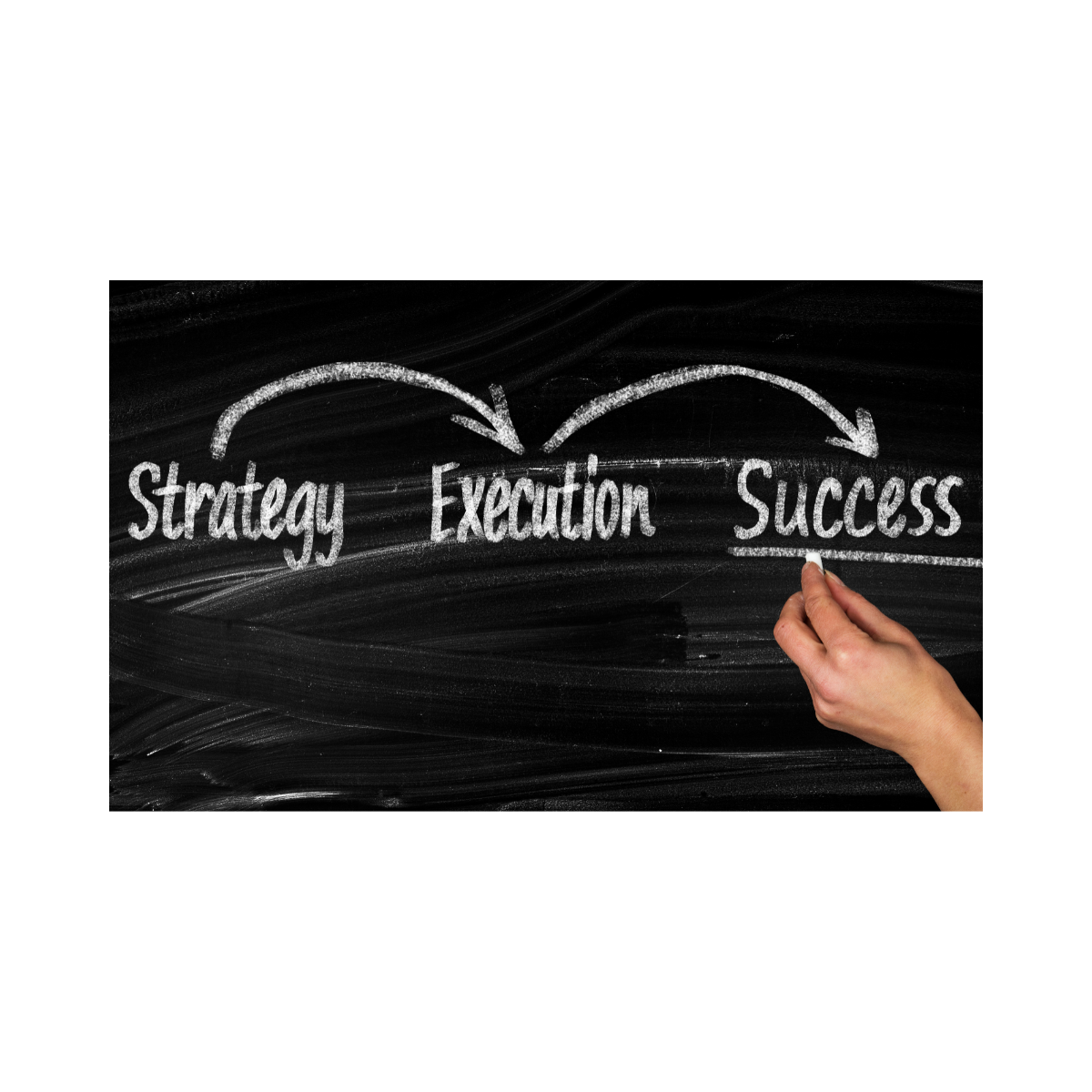
Because organisational performance is not built through activity alone. It’s built through alignment.